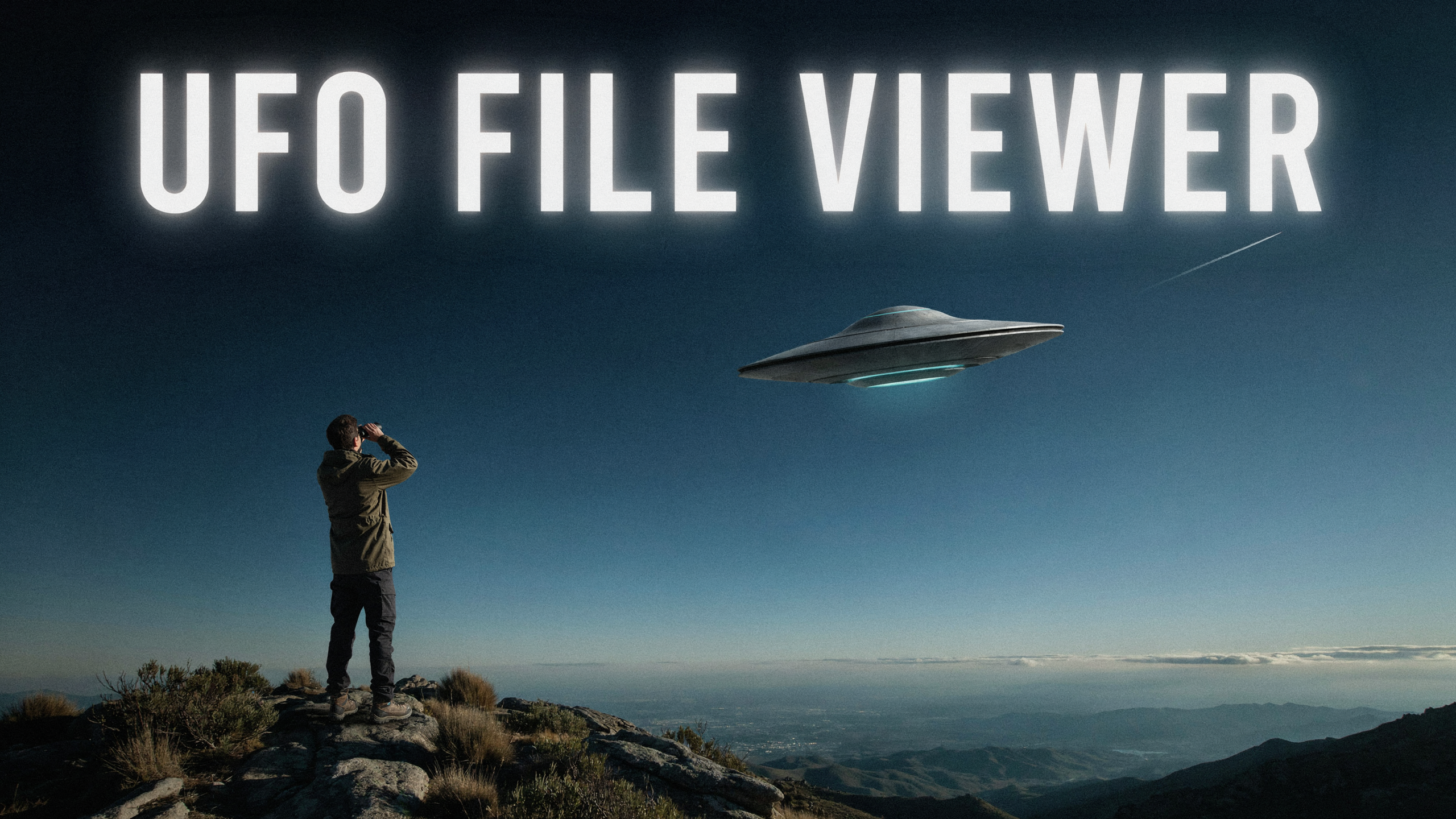

The South Florida UFO File Viewer lets you explore records and see what they establish—and what remains unresolved. For UFO documents, the UFO File Viewer presents declassified files showing how officials collected witness reports, checked radar and flight records, and assessed possible risks to aviation and national security. Projects Sign, Grudge, and Blue Book considered ordinary explanations, including aircraft, weather, and optical effects. Some reports remained unidentified because evidence was incomplete; that label did not establish extraterrestrial origin. Records also show how secrecy protected military programs and capabilities, while gaps and contradictions leave questions open.
What Can Declassified UFO Files Reveal?
Although declassified UFO files can clarify what officials observed and how they responded, they rarely settle what an unexplained sighting was. Their value lies chiefly in documenting records: witness statements, dates, locations, instrument readings, correspondence, and the limits of available analysis. Such material can show how reports were described, what evidence survived, and where gaps or contradictions remain. It may also reveal how ordinary explanations—such as aircraft, weather, or optical effects—were considered, without proving that every case was resolved.
Readers should distinguish contemporaneous observations from later summaries and speculation. A document’s official origin does not guarantee that its claims are accurate, complete, or independently verified. Cross-checking records against weather data, flight information, and other sources can strengthen conclusions, but uncertainty may persist.
Public fascination can encourage careful attention to these files, while archival preservation makes them accessible for future review. Responsible interpretation serves the public by separating evidence from inference and acknowledging what the record cannot establish.
Why Did Officials Investigate UFO Sightings?
Officials investigated UFO reports chiefly to assess possible national security risks and protect controlled airspace. Reports of unidentified objects could involve foreign aircraft, surveillance technology, or ordinary phenomena misidentified by witnesses. Investigation helped determine what the objects were and whether they posed a credible threat.
National Security Concerns
Reports of unidentified flying objects drew official attention primarily because they could pose national security risks, not because investigators had established an extraterrestrial origin. Declassified records show that officials sought to determine whether sightings reflected foreign surveillance, unfamiliar technology, mistaken identification, or unreliable reporting. Near sensitive facilities, unexplained observations raised questions about nuclear site security and whether adversaries might be testing defenses or gathering information. Investigations also served intelligence oversight: agencies needed documented procedures for collecting reports, evaluating evidence, and sharing relevant findings with responsible authorities. Such work could help protect personnel and the public by distinguishing credible hazards from ordinary aircraft, astronomical events, or sensor errors. The files generally record uncertainty, not proof of extraordinary craft. Their significance lies in how governments evaluated potential threats while acknowledging gaps in available evidence.
Protecting Airspace
Unidentified objects in controlled airspace could disrupt aviation even without posing a military threat. Declassified records show that officials investigated reports to assess possible risks to aviators, passengers, and nearby communities. Airspace monitoring helped authorities track reported locations and consider whether flight safety procedures were needed. A report alone did not establish that an object was extraordinary or hostile.
| Concern | Protective response |
|---|---|
| Collision risk | Alert relevant aviation personnel |
| Restricted-zone entry | Review airspace monitoring records |
| Uncertain hazard | Apply interception protocols cautiously |
Such measures were precautionary, not proof of danger. Officials had to balance rapid response with the risk of disrupting civilian flights or misidentifying ordinary activity. Clear reporting channels supported aviators and air traffic staff, while documented procedures helped agencies coordinate decisions. The central purpose was public safety: reducing avoidable hazards without treating every unexplained sighting as a threat.
Identifying Unusual Objects
Why did officials investigate UFO sightings? Officials examined reports to determine whether unfamiliar objects posed risks to aircraft, national security, or public safety—not to confirm extraterrestrial explanations. Declassified files show investigators compared witness accounts with radar records, flight schedules, weather data, and known astronomical events. This evidence-based process helped distinguish potentially significant observations from ordinary activity.
Visual identification was often limited by distance, darkness, viewing angles, and brief exposure. Optical illusions, atmospheric effects, and misjudged speed or size could make aircraft, balloons, planets, or other familiar objects appear unusual. Investigators consequently assessed the reliability of each report and noted gaps where evidence was incomplete.
Careful review also served communities by correcting misinformation, identifying practical hazards, and informing aviation procedures. When records could not establish an object’s identity, officials generally classified the observation as unresolved, not proof of extraordinary technology.
How Did Officials Gather UFO Reports?
To collect UFO accounts systematically, officials relied on military personnel, air-traffic controllers, law-enforcement agencies, and members of the public to submit observations. Reports arrived through established reporting channels, including military command structures, official forms, telephone calls, and correspondence. Procedures varied by agency and period, so records did not always capture the same details or follow a uniform format.
Investigators sought practical information: the time and location, duration, weather, direction of movement, apparent size, and the observer’s vantage point. Witness interviews helped clarify descriptions and distinguish direct observation from secondhand accounts. Officials could compare statements with radar records, flight schedules, weather data, and other available documentation, though such material was often incomplete.
The process depended on timely, specific reporting and careful recordkeeping. A report documented what someone said they saw; it did not by itself establish an object’s identity or origin. Analysts consequently treated accounts as leads for assessment, not proof, while preserving details that might help resolve ordinary explanations or identify unresolved cases.
What Did Project Sign Find in 1948?
In 1948, Project Sign’s investigators examined reports of unusual aerial sightings but found no verified evidence that they came from extraterrestrial craft. The Army Air Forces unit assessed witness accounts, sought explanations in aircraft, weather, and other known phenomena, and treated unresolved cases cautiously. Its work helped establish a formal process for evaluating reports, rather than confirming extraordinary claims.
The 1948 Project Sign conclusions reflected both the limits of available evidence and the need to investigate public concerns responsibly:
- Some sightings remained unexplained because reports lacked sufficient detail.
- Investigators considered conventional causes before proposing exceptional ones.
- No confirmed physical evidence established an extraterrestrial origin.
- Uncertainty in individual cases did not prove a common, hidden cause.
A report’s unexplained status meant that investigators could not identify its source, not that it represented a spacecraft. The extraterrestrial hypothesis debate consequently remained open to scrutiny, but the documents did not settle it in favor of visitors from beyond Earth. Sign’s findings supported careful inquiry, calibrated claims, and respect for witnesses without treating testimony alone as proof.
What Did Project Grudge Make of Reports?
After Project Sign ended, the Air Force established Project Grudge in 1949 to assess reports of unidentified flying objects. Its investigators reviewed cases, but the program’s conclusions leaned toward ordinary explanations, including misidentification, atmospheric effects, and hoaxes. Grudge argued that reports did not establish a threat or evidence of advanced technology. However, its methods and dismissive tone drew criticism from observers who believed the cases merited more careful examination.
| Evidence category | Grudge’s interpretation | Limitation |
|---|---|---|
| Witness accounts | Often mistaken identification | Memory and context varied |
| Photographs | Usually inconclusive | Images lacked detail |
| Radar returns | Possible technical or weather effects | Records could be incomplete |
The report also considered public reaction and media coverage, treating attention as a factor that could encourage further reports. That interpretation did not prove witnesses were insincere; it highlighted how expectations might shape descriptions. For officials serving the public, the episode illustrates the value of transparent methods, respectful interviews, and conclusions proportionate to available evidence.
What Do Project Blue Book Records Show?
Project Blue Book investigated reports of unidentified flying objects to assess their nature and potential national-security significance. Its case files document witness accounts, available evidence, and investigators’ explanations, though record quality and completeness varied. Some sightings remained unidentified, a classification that indicated insufficient evidence for resolution—not proof of extraterrestrial origin.
Project Blue Book’s Purpose
What did Project Blue Book set out to establish? The U.S. Air Force created the program in 1952 to assess reports of unidentified flying objects and determine whether they posed a threat to national security. Its investigation objectives also included evaluating whether reports offered scientific value and whether reliable evidence supported claims of unusual aircraft. The program’s public reassurance role was to provide an official channel for examining concerns, not to confirm extraordinary explanations.
Its stated aims included:
- Collecting and reviewing reports from military and civilian sources.
- Evaluating potential risks to national defense and aviation.
- Seeking scientific explanations where evidence permitted.
- Informing officials and the public about the program’s conclusions.
These aims describe an administrative inquiry, not proof that the Air Force definitively explained every report it received. Records show the Air Force framed Blue Book as a practical assessment effort, constrained by available information and institutional priorities.
Case Investigations and Findings
The case files show an investigative process shaped by uneven evidence: Air Force personnel compared witness accounts with available radar, weather, and astronomical data, then assigned explanations when the record supported them. Investigators built a case chronology from interviews, reports, and follow-up checks, evaluating witness credibility alongside the limits of observation and memory. Records indicate that explanations varied in strength; some rested on corroborating data, while others reflected plausible but unconfirmed identifications.
| Evidence reviewed | Investigative use |
|---|---|
| Witness statements | Compared for consistency |
| Radar and weather data | Checked against reported conditions |
The files document administrative judgments, not controlled experiments. Investigators sought practical explanations and recorded uncertainty when evidence remained incomplete. Their methods can inform responsible public service: preserve original accounts, distinguish observation from interpretation, and avoid presenting a tentative conclusion as established fact. The record’s value lies partly in showing how officials handled evidence, including its gaps and constraints.
Unidentified Sightings in the Records
Among the cases examined, some remained unidentified because the available evidence did not support a reliable explanation. Project Blue Book’s unresolved cases were not proof of extraterrestrial activity; they reflected limits in the information collected and the analysis possible at the time. Their archival context matters: records vary in detail, and later readers may lack original observations or supporting materials.
- Civilian witnesses reported lights, shapes, or movements that investigators could not confidently match to known causes.
- Missing measurements, photographs, or independent accounts often restricted evaluation.
- Some reports involved brief events, making distance, speed, and size difficult to establish.
- Unidentified meant unresolved in the file, not inexplicable in principle.
A careful reading distinguishes documented observations from conclusions. Preserving these records can serve the public by supporting transparent research, historical understanding, and responsible discussion without overstating what the evidence establishes.
Which Blue Book Cases Stayed Unexplained?
Although Project Blue Book closed in 1969, its records retained a small set of cases the Air Force could not identify. “Unidentified” meant that investigators lacked enough reliable information to assign a conventional explanation—not that they had established an extraterrestrial origin.
Case Selection depended on the quality and completeness of each report, not on how dramatic it seemed. Some files included multiple observers, instrument readings, or photographs, yet still lacked the detail needed for a firm conclusion. Witness Testimony could be sincere and consistent while remaining insufficient to establish an object’s distance, speed, or identity. Investigators also faced incomplete records and observations made under difficult conditions.
The best-known unresolved reports included the 1952 Washington, D.C., radar-visual sightings and the 1965 Exeter, New Hampshire, reports. Blue Book did not resolve every detail in these cases, but unresolved status was not proof of extraordinary technology. It marked a limit in the available evidence. Careful readers should distinguish that administrative finding from claims the documents do not support.
How Did Officials Explain Common UFO Sightings?
Officials often attributed reported UFOs to ordinary objects, including weather balloons and aircraft, whose appearance could change with altitude, distance, or lighting. People also mistook bright planets and stars for unusual craft, and optical effects and radar limitations could distort or misrepresent observations. These explanations accounted for many reports, though investigators assessed each case against the available evidence.
Weather Balloons and Aircraft
Many reports of unidentified lights and objects had ordinary explanations, including weather balloons, aircraft, and other atmospheric phenomena. Declassified evaluations often compared witness accounts with flight records, weather data, and known equipment, while acknowledging that incomplete observations could leave cases unresolved.
Officials considered several practical clues:
- Weather balloon identification: Slow drift, altitude changes, reflective surfaces, and predictable wind movement could make balloons appear unusual, especially at night.
- Aircraft performance: Officials assessed navigation lights, turns, speed, and distance against aircraft capabilities and recorded routes.
- Viewing conditions: Haze, cloud layers, and limited reference points could distort estimates of size, height, and motion.
- Evidence limits: Reports lacking precise times, locations, or corroborating records could not support firm conclusions.
Such explanations did not prove every report mistaken; they showed why careful documentation mattered before extraordinary claims were accepted.
Astronomical Misidentifications
Beyond balloons and aircraft, investigators also examined whether reported objects were bright planets, stars, or other astronomical phenomena. Venus, especially, could appear unusually brilliant near the horizon, while Jupiter and bright stars could attract attention in dark skies. Astronomical misidentification causes included limited familiarity with the night sky, changing viewing conditions, and expectations shaped by reports of unusual activity. Planetary viewing illusions could make a steady celestial body seem to hover, shift, or change brightness as observers watched from moving vehicles or through atmospheric haze. Officials compared witness descriptions with astronomical charts, dates, locations, and the positions of known objects. These comparisons offered ordinary explanations for some reports, though available records could not resolve every case. Careful assessment helped distinguish sincere observation from mistaken identification without dismissing witnesses’ concerns.
Optical and Radar Errors
How could a light in the sky appear to dart or vanish, or a radar return suggest an object where none was present? Declassified assessments often pointed to ordinary viewing conditions and instrument behavior rather than extraordinary craft. Atmospheric light distortion, haze, temperature layers, and reflections could alter apparent position, brightness, or motion. Radar evidence also required caution: operators interpreted incomplete signals under demanding conditions.
- Parallax: An observer’s movement could make a distant light seem to shift rapidly.
- Refraction: Atmospheric layers could bend light, changing its apparent location or visibility.
- Clutter: Terrain, weather, or nearby objects could produce misleading radar echoes.
- Sensor calibration limits: Misalignment, interference, or equipment faults could distort readings.
Officials compared independent observations and checked instruments where records allowed. Such explanations did not resolve every report, but they helped distinguish uncertainty from evidence and supported responsible public understanding.
What Did the Condon Report Change?
In 1968, the Condon Report changed the official debate over UFOs less by resolving individual sightings than by shaping government policy. Led by physicist Edward Condon, the University of Colorado study reviewed reports and concluded that further extensive investigation was unlikely to yield major scientific advances. The Air Force cited that judgment when it ended Project Blue Book in 1969.
The report’s impact on scientific funding was substantial: federal support for a dedicated UFO investigation declined, and researchers had fewer institutional resources for systematic study. This shift did not mean the report explained every sighting; it acknowledged unresolved cases while questioning their scientific value. Its conclusions consequently narrowed the government’s research commitment rather than settling the phenomenon.
Changes to public trust and media coverage were more complicated. Some readers treated the report as authoritative, while critics questioned its methods and perceived independence. News coverage increasingly framed UFOs as a disputed scientific subject, leaving public confidence divided rather than conclusively restored or diminished.
What Do UFO Memos Reveal About Security?
While the Condon Report narrowed the government’s research commitment, declassified UFO memoranda show that officials also treated sightings as potential security concerns. They focused less on proving extraordinary origins than on whether an unknown object could affect national defense or public safety.
The records indicate several practical priorities:
- Protect sensitive information: Officials considered whether reports might expose military capabilities or reveal gaps in surveillance.
- Coordinate agencies: Intelligence sharing helped relevant offices compare concerns and route reports to responsible authorities.
- Assess possible threats: A measured threat assessment distinguished unexplained observations from evidence of hostile intent.
- Limit public alarm: Some memoranda weighed how official statements could inform citizens without overstating uncertain findings.
Such concerns do not establish that UFOs represented foreign weapons or other dangers. They show that uncertainty itself could prompt administrative attention, especially when reports intersected with defense responsibilities. The documents also reflect institutional caution: officials sought useful information while resisting conclusions unsupported by evidence. Their security framing was consequently procedural, not proof of a hidden explanation. This approach aimed to protect people and public trust.
How Were Radar and Pilot Reports Checked?
Analysts checked radar and flight-crew reports by comparing independent records, not by treating either account as conclusive. Radar cross checking involved examining logs from multiple stations, tracking continuity, equipment status, weather, and possible interference. Analysts compared reported positions and times with known aircraft routes and other recorded activity. Agreement between separate systems could strengthen a sighting’s credibility, but radar returns alone could not establish what produced them.
Pilot testimony verification relied on interviews, flight plans, cockpit procedures, and contemporaneous communications. Investigators assessed whether witnesses had clear views, consistent timelines, and opportunities to misidentify familiar objects or lights. They also considered fatigue, visibility, instrument limitations, and whether accounts had been influenced by discussion or publicity. Differences between testimony and radar data were documented rather than automatically resolved in favor of either source.
Such checks could narrow explanations, expose recording errors, or leave a case uncertain. Their value lay in disciplined comparison and transparent limits, helping public servants distinguish evidence from inference without overstating conclusions.
What Do Declassified Files Say About Roswell?
Applying the same distinction between records and inference to Roswell, declassified files document military explanations for debris recovered in New Mexico in 1947, but do not substantiate claims of an extraterrestrial craft. The record is best understood by separating contemporaneous evidence from later recollections.
- Initial Army announcements described a “flying disc,” but officials soon identified the material as a weather balloon.
- Later Air Force reviews connected the debris to Project Mogul, a classified balloon program intended to detect Soviet nuclear tests. The proposed explanation is Mogul balloon debris, not evidence of an alien vehicle.
- Roswell witness accounts vary in detail and were recorded or publicized years after the event, limiting their value as direct, consistent documentation.
- Government reviews found no verified physical evidence supporting extraterrestrial recovery claims; accounts of “alien bodies” were associated with test dummies and unrelated incidents.
These findings do not resolve every discrepancy in memory, but they distinguish documented explanations from claims that exceed the available evidence. Careful assessment helps readers serve others by sharing conclusions without overstating certainty.
What Do UFO Files Reveal About Secrecy?
What do UFO files reveal about secrecy? Declassified records show that government agencies have withheld some information about unidentified aerial reports, but the reasons vary. Documents cite protection of intelligence sources, sensor capabilities, military readiness, and foreign relations. Such concerns can justify temporary classification; they do not establish that officials concealed evidence of extraterrestrial visitors.
The files also reveal limits in institutional recordkeeping. Reports were sometimes incomplete, inconsistently labeled, or distributed among agencies, making the public record difficult to assemble. Classified archives consequently reflect both deliberate restrictions and administrative practices, rather than a single, unified account. Released material may clarify procedures while leaving specific observations unresolved.
Secrecy can weaken public trust when explanations are delayed, records are missing, or disclosure appears selective. Yet transparency must be balanced against legitimate security risks and the privacy of witnesses. Responsible disclosure can serve the public by explaining what was collected, why information remains withheld, and when restrictions may be reviewed. The documents support scrutiny of government decisions, not conclusions beyond the available evidence.
How Can You Read UFO Documents Critically?
Reading UFO documents thoughtfully begins with separating what a record directly establishes from what it merely reports or suggests. A memo may confirm that an observation was logged, not that its interpretation was correct. Careful readers assess each document’s origin, purpose, and limits before drawing conclusions.
- Source verification: Check authorship, date, agency, signatures, and whether the copy matches an authenticated record.
- Archival context: Examine surrounding files, classification history, and catalog descriptions; isolated pages can lose meaning.
- Evidence versus assertion: Distinguish firsthand observations, secondhand accounts, hypotheses, and administrative summaries.
- Corroboration and uncertainty: Compare independent records and note missing data, conflicting details, or unexplained terminology.
Such habits help readers avoid treating official language as proof of extraordinary claims or dismissing records simply because they are incomplete. They also support responsible public discussion: conclusions should match the evidence, uncertainty should be stated plainly, and claims should remain traceable to their sources. A skeptical approach is not cynicism; it is a practical service to anyone seeking reliable information.
What Do Today’s UAP Records Still Leave Open?
Even carefully verified UAP records leave essential questions unresolved: they may document an observation or report without identifying its cause. A confirmed sighting is not, by itself, evidence of extraordinary technology. Analysts must distinguish what instruments measured from what observers inferred, while accounting for sensor limitations and data gaps.
| Open question | Why it remains unresolved |
|---|---|
| What produced the signal? | Records may lack identifying details. |
| How reliable was the measurement? | Calibration and viewing conditions vary. |
| Could ordinary objects explain it? | Context or comparison data may be missing. |
Some cases cannot be settled because radar, imagery, or witness accounts are incomplete, inconsistent, or unavailable for independent review. Even multiple reports may share a source or interpretive bias. Public summaries can also omit technical details needed for replication.
Responsible assessment consequently separates established facts, plausible explanations, and unknowns. Better data collection, transparent methods, and careful review can reduce uncertainty. This approach serves the public by avoiding both premature dismissal and unsupported claims, while preserving unresolved cases for further study.
South Florida UFO File Viewelets youto explore declassified UFO files and see how officials collected, assessed, and sometimes withheld information about unusual sightings. The documents confirm that reports and investigations took place, but they do not establish that extraterrestrial craft visited Earth. Many cases remain unresolved because records are incomplete, observations were brief, or evidence was inconclusive. Read them thoughtfully by distinguishing what the documents confirm from what later accounts infer. Today’s UAP records may clarify procedures and findings, but unanswered questions don’t prove extraordinary explanations. Explore the UFO File Viewer.